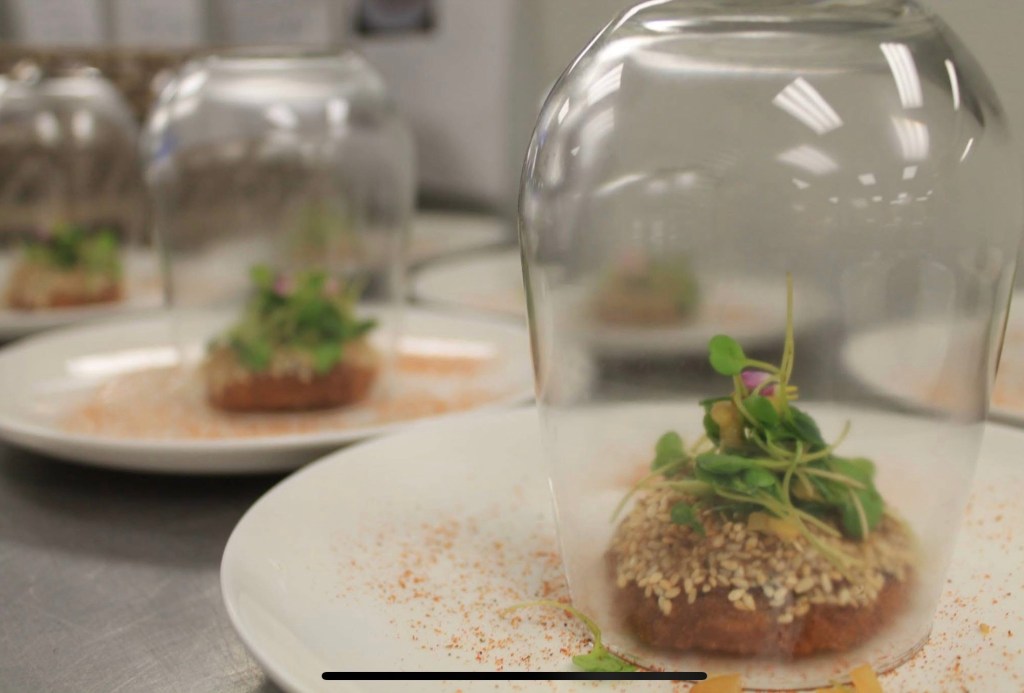
Some dishes are meant to be eaten. Others are meant to be experienced. This Shrimp Toast with Lemon-Ginger Air falls into the latter category—a dish where technique, texture, and aroma come together to create something unexpected and immersive.
Reimagining Shrimp Toast
Traditional shrimp toast is often heavy, fried, and intensely rich. This version, however, takes a more refined approach—crispy, light, and elegantly layered. The base is a sesame-crusted toast, its golden crunch giving way to a smooth, deeply flavorful shrimp mousse. Instead of overwhelming the palate, the mousse is balanced with bright citrus notes and a touch of umami, making each bite silky yet structured.
Topping the toast is a delicate arrangement of microgreens and edible flowers, reinforcing an earthy freshness that cuts through the richness. A final dusting of citrus-infused seasoning elevates the profile, adding just the right amount of brightness to the dish.
The Drama of Lemon-Ginger Air
What truly sets this dish apart, though, is the use of Lemon-Ginger Air—a technique-driven element designed to engage the senses beyond taste.
Each plate is presented beneath a glass cloche, trapping in a cloud of fragrant lemon and warm ginger vapor. The moment the cloche is lifted, a subtle, almost ethereal mist escapes, surrounding the dish in an aromatic burst of citrus and spice. It’s an invitation—before even taking a bite, guests are already immersed in the dish’s essence.
Balancing Flavor with Sensory Impact
The interplay of crisp toast, creamy shrimp, and light, aromatic air makes this dish a study in contrasts. The nutty crunch of sesame, the natural sweetness of shrimp, the bright acidity of lemon, and the warmth of ginger all come together in a way that feels harmonious yet unexpected.
But beyond flavor, this dish is about creating an experience. It’s the kind of plate that makes people pause, not just to admire its beauty but to appreciate how food can engage multiple senses at once.
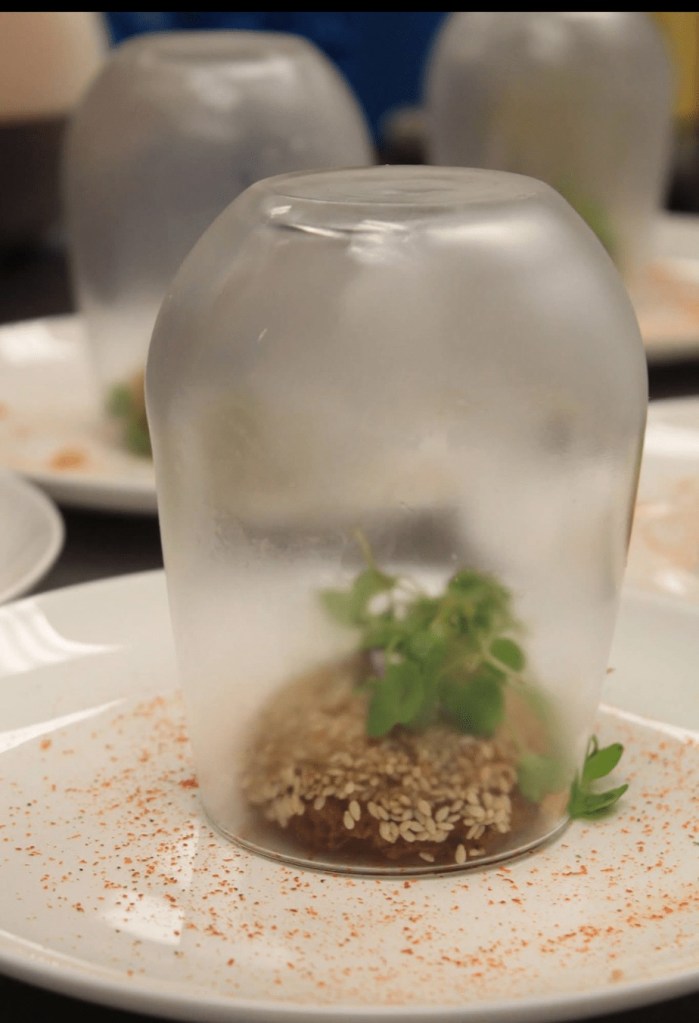
A Dish Designed for Innovation
This Shrimp Toast isn’t just a standalone creation—it’s a proof of concept for how technique and plating can transform even familiar flavors into something elevated, modern, and engaging. Whether as an amuse-bouche, a small plate, or part of a larger tasting menu, it represents a style of cooking that isn’t just about feeding people—it’s about making them feel something.
 The Elevated Chef