Every now and then, a dish starts with a flavor… and sometimes, it starts with a splash.
This one started with both.
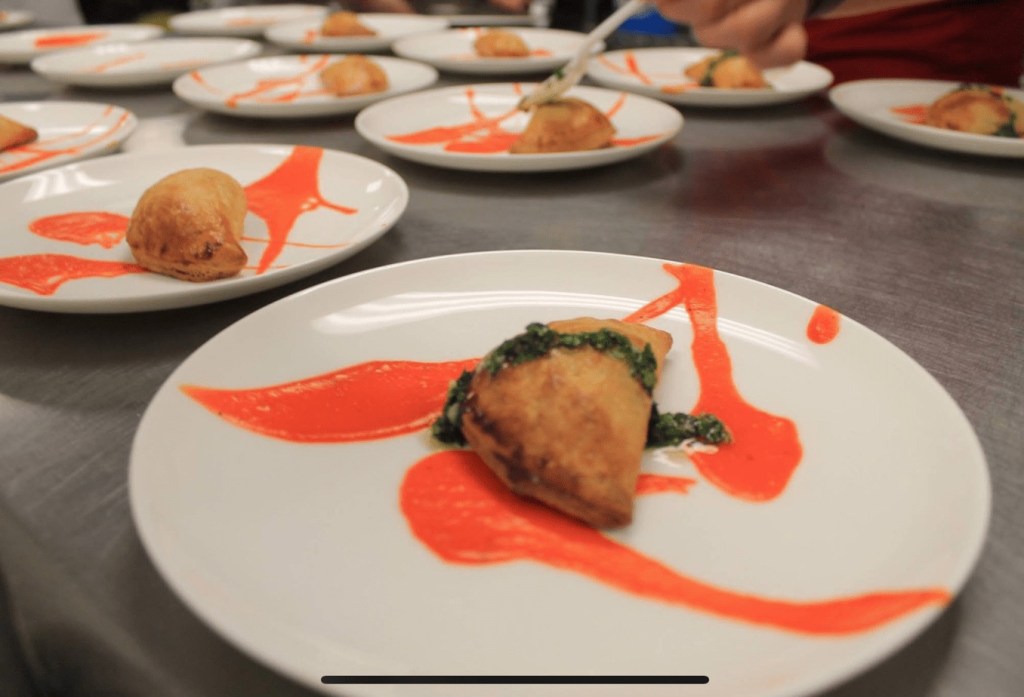
I’ve always admired José Andrés—not just for his food, but for his fire. His ability to bring boldness and soul to a plate, and still make you feel something bigger than food. That energy inspired this empanada.
It’s filled with grilled vegetables and melty Mahón cheese, all wrapped in a homemade cream cheese dough. Spanish in spirit, comforting in texture, but still with a little drama. The kind of plate that makes noise without saying a word.
We call the sauce “Piquillo Paint”—a piquillo pepper purée thrown onto the plate like it was meant to be there all along. It’s not careful. It’s expressive. It’s how I imagine José would do it—loud, unapologetic, full of flavor.
This dish feels like a moment where food gets to be fun again. Not fussy. Just big-hearted and bold. And sometimes, that’s exactly what we need in the middle of a 1,000-person day.
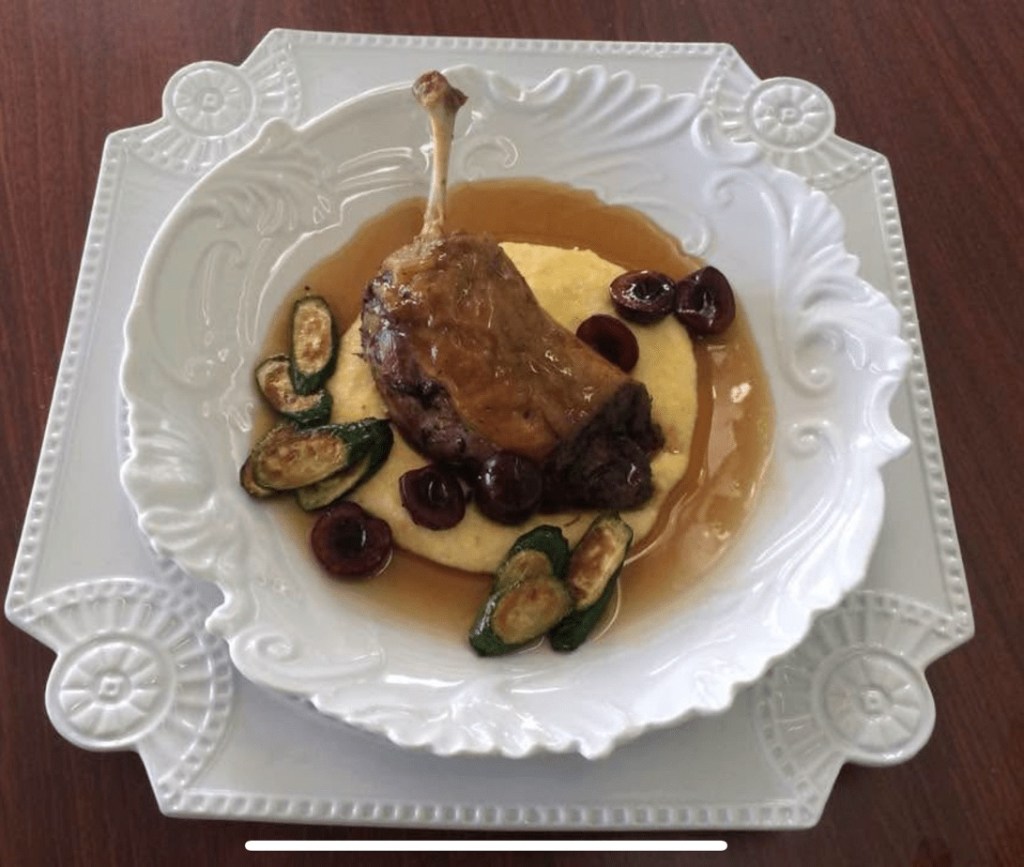
In the world of refined comfort food, few dishes capture the essence of indulgence and balance like duck confit with creamy polenta, pan-seared zucchini, and fresh cherries. This dish is a testament to the beauty of slow-cooked meats paired with rich, velvety textures and bursts of fresh, seasonal brightness. Not only is it an experience on the palate, but it’s also a work of art on the plate.
But crafting a dish like this isn’t just about flavor—it’s about presentation. With the right plating and food photography techniques, a meal like this transcends the dining table and becomes a story, a moment worth capturing.
The Dish: A Symphony of Textures & Flavors
At its heart, this dish is about the contrast of textures and complementary flavors:
• Duck Confit: Slow-cooked to perfection, with fork-tender meat and a crispy, golden-brown exterior. The richness of the duck leg is intensified by the rendered fat, giving it deep, savory flavor.
• Creamy Polenta: A smooth, buttery base that cradles the duck confit, offering a subtle sweetness and lightness to counterbalance the richness.
• Fresh Cherries: Their natural tartness and juiciness brighten the dish, cutting through the richness of both the duck and polenta.
• Pan-Seared Zucchini: A delicate vegetal element that adds texture and a mild, nutty sweetness. The caramelized edges bring depth and contrast.
• Glossy Sauce: A reduction or jus that ties everything together, enhancing the dish with an umami-forward depth.
This dish is a perfect example of how technique and ingredients work together. The confit process intensifies the duck’s natural flavors, the polenta adds silkiness, and the cherries provide a much-needed acidic lift, preventing the dish from feeling too heavy.
Plating: Where Art Meets Functionality
A dish of this caliber deserves more than just a simple plate-up. It’s about intentional design—where every component plays a role in the visual narrative.
Key Plating Elements:
• The Vessel: The ornate white plate, layered over a square charger, brings a sense of timeless elegance. The curves and embellishments of the dish frame the food beautifully, making it feel regal and inviting.
• Composition: The duck is placed as the focal point, slightly off-center, with the polenta serving as a base to elevate it. The zucchini and cherries are arranged naturally, creating a sense of organic movement on the plate.
• Sauce Placement: Rather than drowning the plate, the sauce is elegantly pooled around the polenta, allowing it to visually frame the dish while ensuring every bite gets a hit of its deep, rich flavor.
Behind the Scenes: Capturing the Dish Through Photography
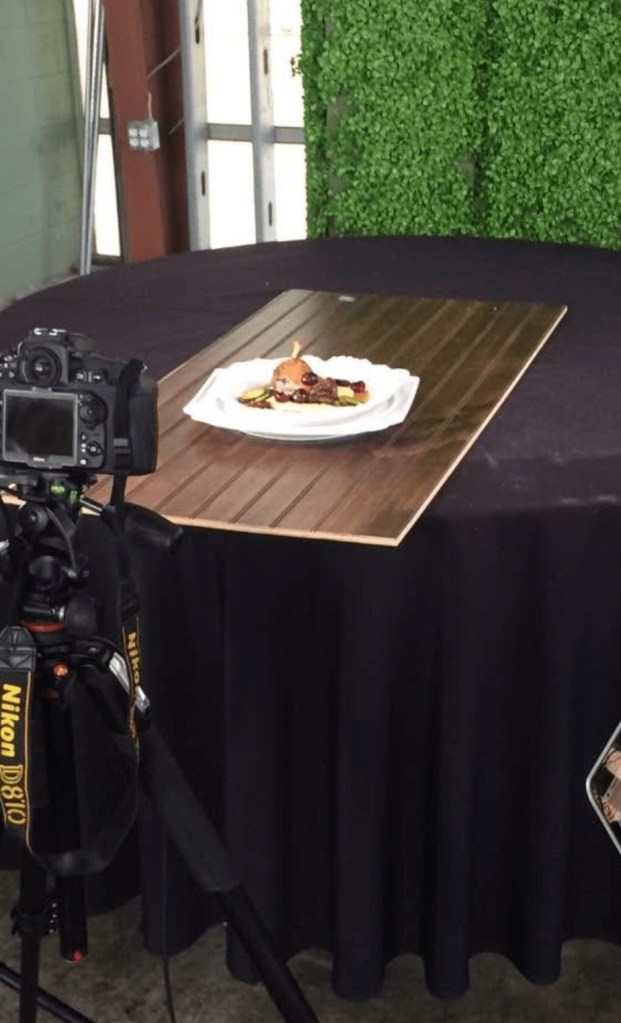
A dish like this isn’t just plated—it’s photographed with precision. The second image offers a glimpse into the art of food photography, where every detail is considered.
How Professional Food Photography Elevates the Dish
1. Setting the Stage:
• The dish is placed on a wooden board, which adds warmth and contrast to the refined elegance of the plate.
• The backdrop, with lush green foliage, introduces an organic element that subtly enhances the natural, farm-to-table aesthetic of the dish.
2. Lighting & Composition:
• Soft, natural light is key in food photography, ensuring that the dish looks inviting without harsh shadows or glare.
• The angle of the camera captures the dish’s height, texture, and intricate details—allowing the crispy duck skin, creamy polenta, and glistening cherries to shine.
3. Professional Equipment Matters:
• The Nikon D810 is a high-resolution camera that captures every nuance, from the golden caramelization on the zucchini to the delicate sheen of the sauce.
• The choice of lens and depth of field ensures that the dish remains the star while the background fades into a complementary blur.
Final Thoughts: A Dish Meant to Be Savored and Shared
This duck confit with polenta, cherries, and zucchini is more than just a meal—it’s an experience. It embodies the artistry of slow-cooked cuisine, the balance of flavors, and the power of visual storytelling through thoughtful plating and photography.
From the crisp skin of the duck to the luxurious mouthfeel of the polenta and the brightness of fresh cherries, this dish speaks to the beauty of refined simplicity. Whether enjoyed in an intimate dining setting or captured through the lens of a camera, it’s a meal that lingers—on the palate, in the mind, and in the frame.
So, next time you plate a dish, ask yourself: How can I make this a moment worth capturing?
Some ideas feel like fate. Cosmic Dust is one of those.
Before I get into how this zodiac-inspired cocktail enhancer came to be, let me rewind a little. Back in 2020—ironically, the Year of the Ox. We started Ox Mocktails as a passion project. I’m a chef by trade, and during the long, uncertain months of that year, I found myself experimenting with cocktail bases, syrups, and infused ingredients to elevate the non-alcoholic options we offered at my job. I wanted mocktails to feel just as exciting and intentional as a crafted cocktail—something you could sip and savor with pride.
That passion turned into Ox Mocktails, my first venture into beverage-focused products rooted in flavor, presentation, and a love for entertaining. But I wasn’t doing it alone. Audrey, my partner in life and in business, was there from the very beginning.
Together, we’ve built Cosmic Dust—a natural evolution of the world we’ve been creating since day one. Audrey has been involved in every part of the process: brainstorming names, testing blends, refining packaging, and helping bring the full vision to life. Her eye for detail, her creativity, and her unwavering belief in this brand have been essential to every milestone we’ve reached. She’s not just behind the scenes—she’s in it, fully, heart and soul.
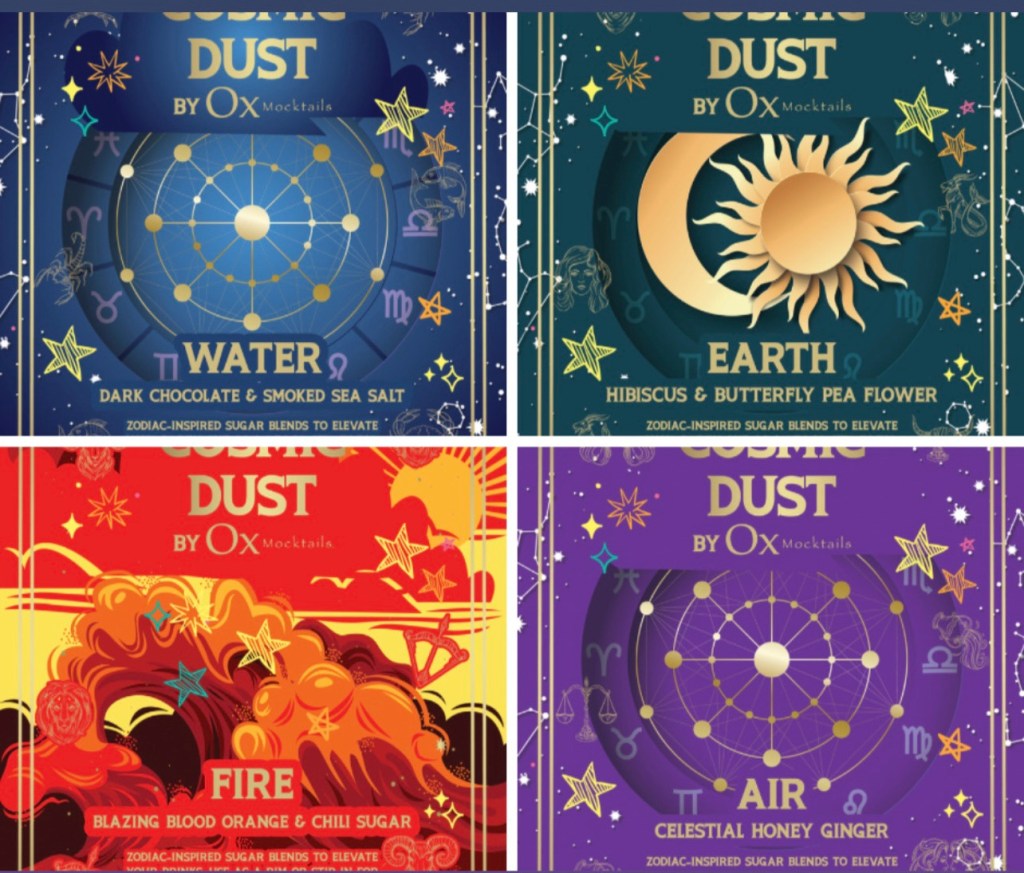
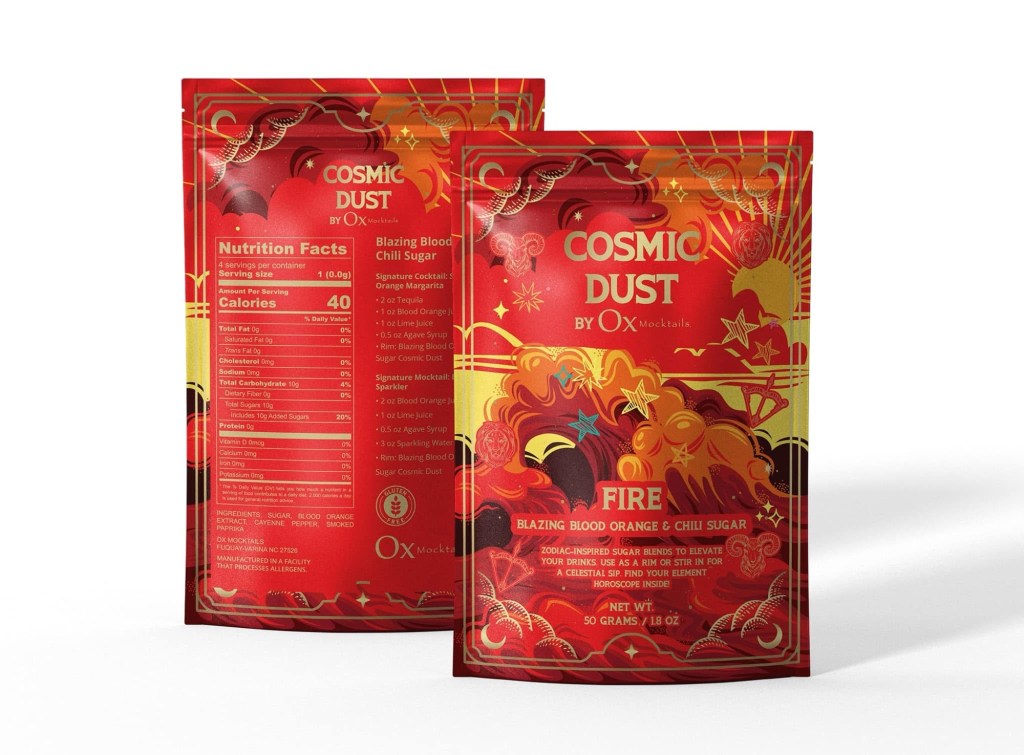
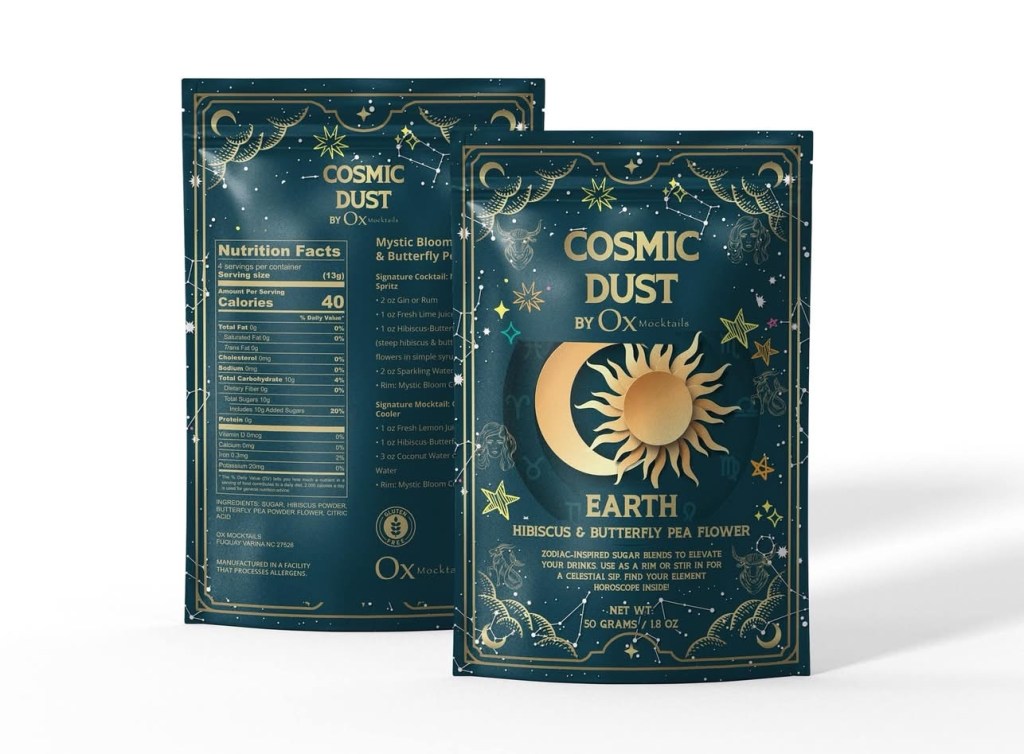
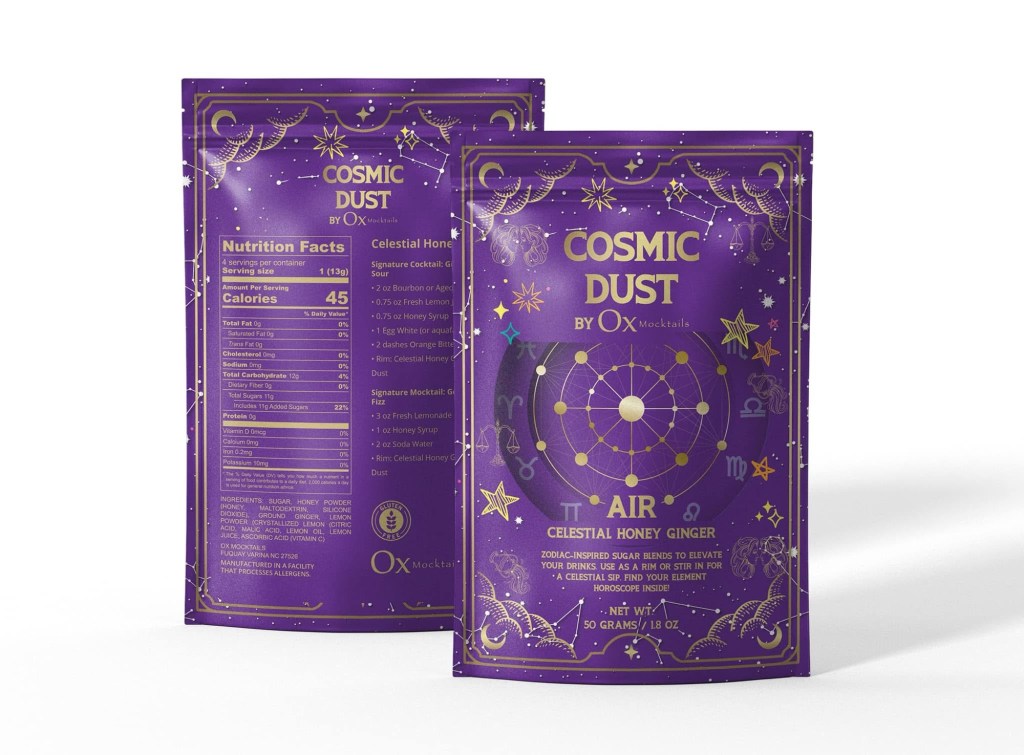
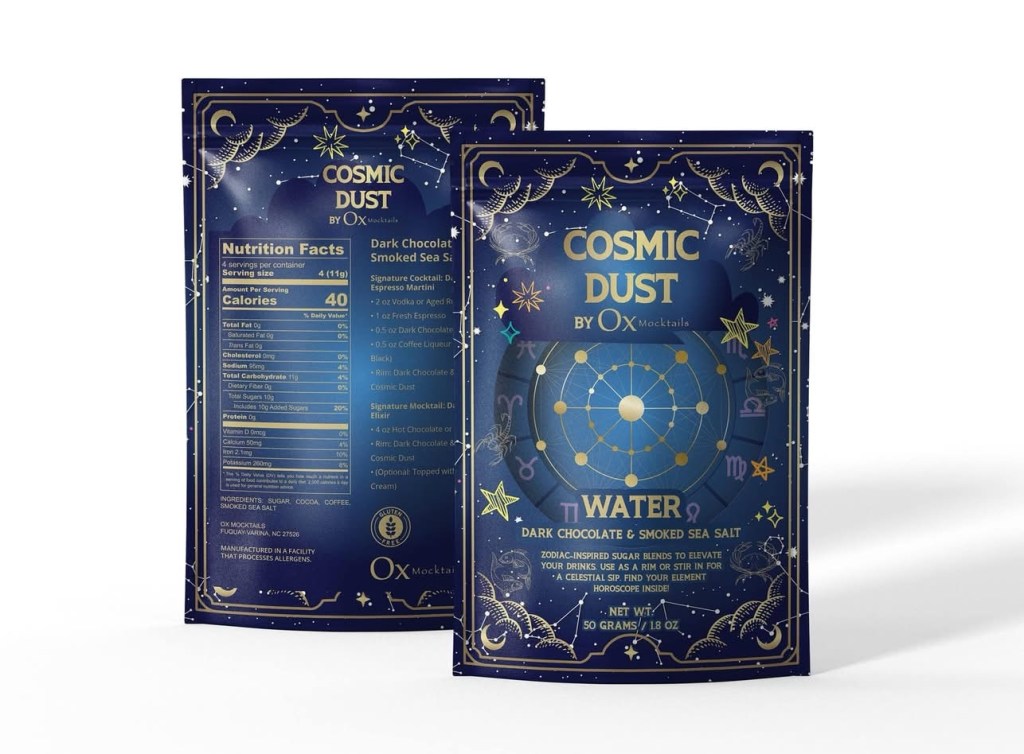
Fast forward to now, and Cosmic Dust is officially real. We created a collection of elemental, zodiac-inspired cocktail dusts that bring magic to every glass. Each flavor was crafted with intention, using a chef’s approach to balance and boldness, paired with a playful storytelling vibe that keeps things fun.
The four elemental blends include:
• Fire – Blazing Blood Orange & Chili Sugar
• Earth – Butterfly Pea Flower & Hibiscus
• Air – Celestial Honey Ginger
• Water – Dark Chocolate & Smoked Salt
Each one can be used as a rim or stirred into a cocktail or mocktail, and every resealable bag includes a cheeky horoscope card inside—because who doesn’t love a little guidance from the universe?
Launching a product from scratch has been wild: sourcing ingredients, working with designers, navigating packaging logistics, and figuring out production. But we’ve done it, and we’re incredibly proud of what we’ve created.
Cosmic Dust is more than just a cocktail garnish. It’s a vibe. A story. A spark. And hopefully, a new favorite in your drink ritual.
Thank you for being here as we launch this new chapter—and cheers to what’s next.
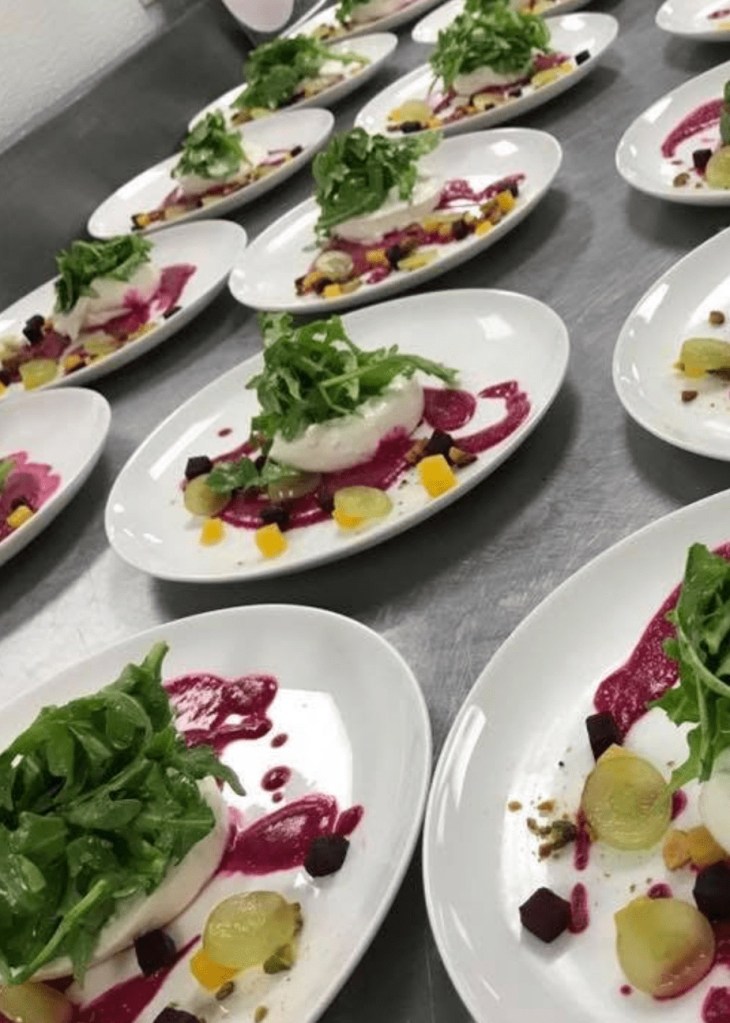
In the realm of refined cuisine, some pairings feel almost destined—complementary in flavor, texture, and visual appeal. Enter Velvet & Cream, a dish that highlights the luxurious silkiness of burrata against the bold, earthy sweetness of beet purée. This dish is more than just a plate of cheese and vegetables; it’s a sensory experience, balancing rich creaminess with vibrant acidity, a hint of sweetness, and a touch of crunch.
The Art of Simplicity: Why Burrata and Beets Work
At first glance, burrata and beets may seem like an unconventional duo, but their contrast is what makes them shine. The cool, milky burrata melts in your mouth, while the deeply roasted, slightly sweet beets provide an earthy backbone. When transformed into a silky purée, the beets wrap the dish in a striking magenta hue, earning the name Velvet & Cream for its lush textures.
Building the Plate: A Symphony of Elements
While the heart of this dish lies in its two key players, it’s the supporting cast that truly elevates it:
• Beet Purée: Velvety smooth and naturally sweet, with a whisper of citrus or balsamic for brightness.
• Burrata: The star, providing indulgence with its creamy center and delicate outer shell.
• Fresh Greens: A light peppery counterpoint—arugula or microgreens add a refreshing contrast.
• Roasted Beets: Diced golden and red beets offer a second layer of texture and depth.
• Grapes: Bursts of juiciness and acidity to cut through the richness.
• Toasted Nuts or Seeds: A delicate crunch—think pistachios, hazelnuts, or sunflower seeds for complexity.
• Finishing Touches: A drizzle of premium olive oil, a sprinkle of sea salt, or a hint of honey for depth.
Plating: Where Art Meets Functionality
This dish is about both flavor harmony and visual impact. A carefully plated Velvet & Cream dish should feel almost like an edible painting:
• Swirls of beet purée to create motion on the plate.
• Burrata placed slightly off-center, inviting the diner to break into its creamy core.
• Scattered elements like grapes, nuts, and roasted beets to create a natural, organic presentation.
• Bright greens to contrast the deep reds and whites, making every plate pop.
Why It’s a Perfect Dish for Catering & Fine Dining
• Vegetarian-friendly, making it a versatile menu addition.
• Stunning on the plate, ensuring visual impact at high-end events.
• Scalable, easy to prep in bulk while maintaining a refined presentation.
• Seasonally adaptable, allowing for variations (e.g., swapping grapes for citrus supremes in winter).
Final Thoughts
Velvet & Cream is proof that elegance lies in balance—between creamy and earthy, rich and fresh, soft and crisp. Whether served as a plated appetizer, a small course, or a shareable starter, it delivers both flavor and beauty in every bite.
Next time you’re designing a menu, let this dish remind you: sometimes, simplicity executed flawlessly is the most impressive thing of all.
Some dishes are meant to be eaten. Others are meant to be experienced. This Shrimp Toast with Lemon-Ginger Air falls into the latter category—a dish where technique, texture, and aroma come together to create something unexpected and immersive.
Reimagining Shrimp Toast
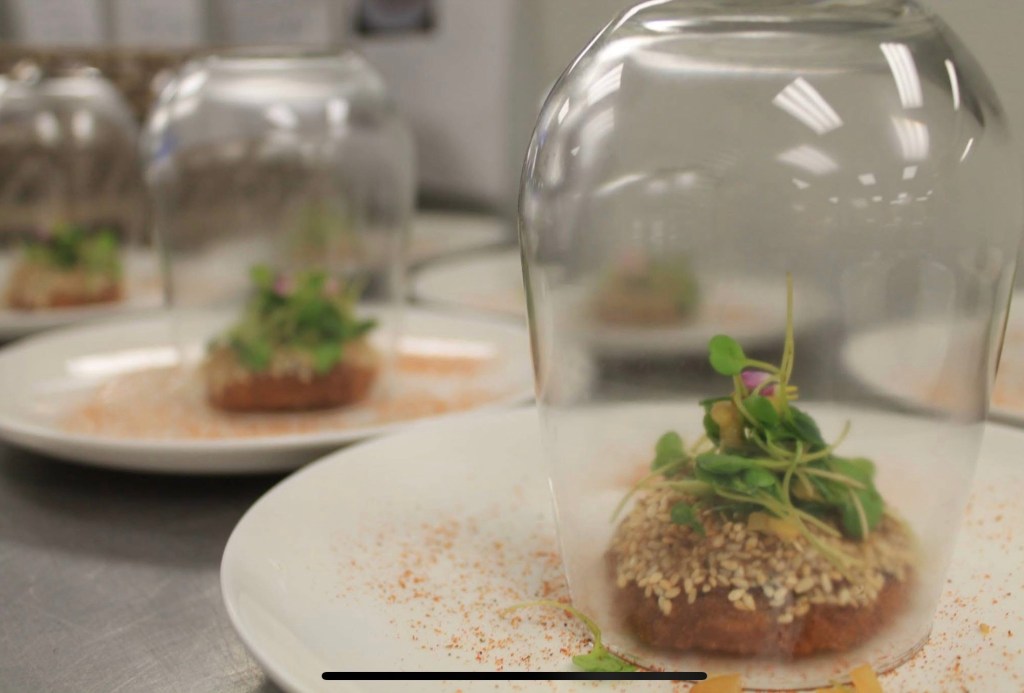
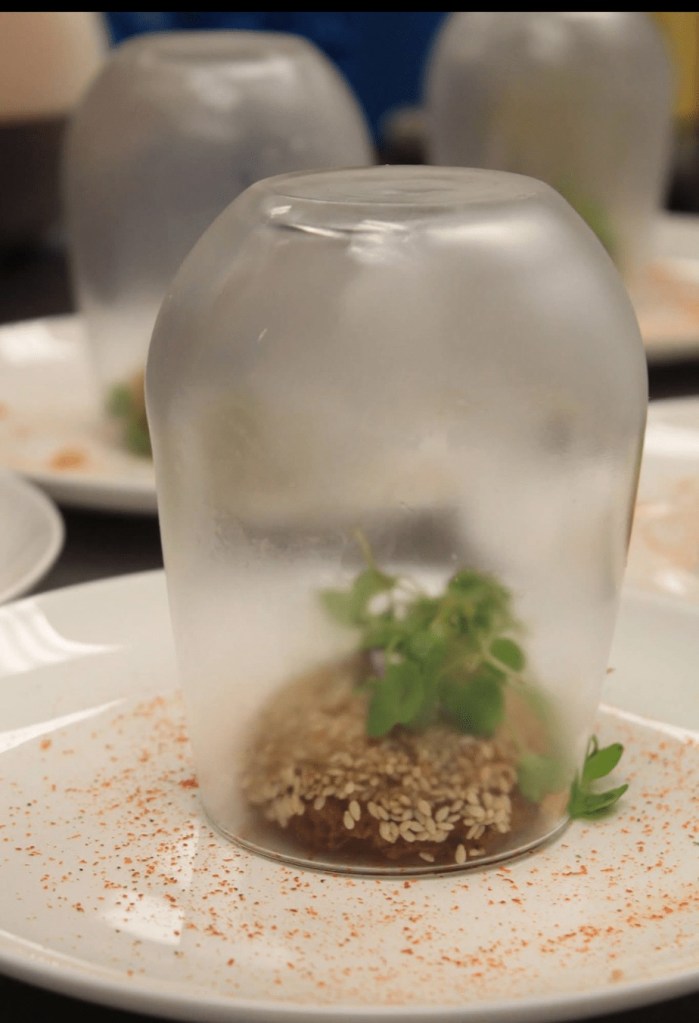
Traditional shrimp toast is often heavy, fried, and intensely rich. This version, however, takes a more refined approach—crispy, light, and elegantly layered. The base is a sesame-crusted toast, its golden crunch giving way to a smooth, deeply flavorful shrimp mousse. Instead of overwhelming the palate, the mousse is balanced with bright citrus notes and a touch of umami, making each bite silky yet structured.
Topping the toast is a delicate arrangement of microgreens and edible flowers, reinforcing an earthy freshness that cuts through the richness. A final dusting of citrus-infused seasoning elevates the profile, adding just the right amount of brightness to the dish.
The Drama of Lemon-Ginger Air
What truly sets this dish apart, though, is the use of Lemon-Ginger Air—a technique-driven element designed to engage the senses beyond taste.
Each plate is presented beneath a glass cloche, trapping in a cloud of fragrant lemon and warm ginger vapor. The moment the cloche is lifted, a subtle, almost ethereal mist escapes, surrounding the dish in an aromatic burst of citrus and spice. It’s an invitation—before even taking a bite, guests are already immersed in the dish’s essence.
Balancing Flavor with Sensory Impact
The interplay of crisp toast, creamy shrimp, and light, aromatic air makes this dish a study in contrasts. The nutty crunch of sesame, the natural sweetness of shrimp, the bright acidity of lemon, and the warmth of ginger all come together in a way that feels harmonious yet unexpected.
But beyond flavor, this dish is about creating an experience. It’s the kind of plate that makes people pause, not just to admire its beauty but to appreciate how food can engage multiple senses at once.
A Dish Designed for Innovation
This Shrimp Toast isn’t just a standalone creation—it’s a proof of concept for how technique and plating can transform even familiar flavors into something elevated, modern, and engaging. Whether as an amuse-bouche, a small plate, or part of a larger tasting menu, it represents a style of cooking that isn’t just about feeding people—it’s about making them feel something.
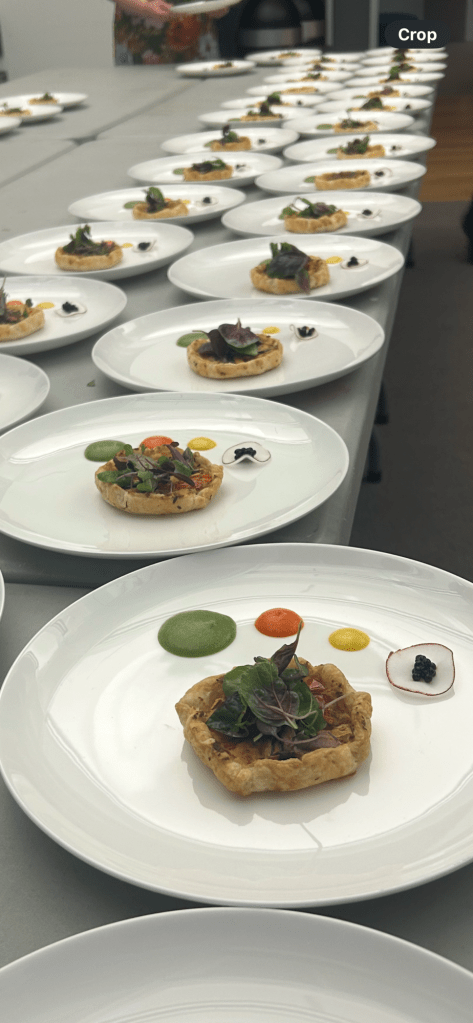
As the floral-inspired dinner progressed, two standout dishes showcased the interplay of texture, color, and bold yet refined flavors: Spanish Shrimp with Smoked Paprika Aioli & Chorizo Oil and a Spring Vegetable Galette with Microgreens & Floral Accents. Each plate was thoughtfully crafted, designed to reflect both the elegance of the season and the vibrancy of floral-inspired cuisine.
Spanish Shrimp with Smoked Paprika Aioli & Chorizo Oil
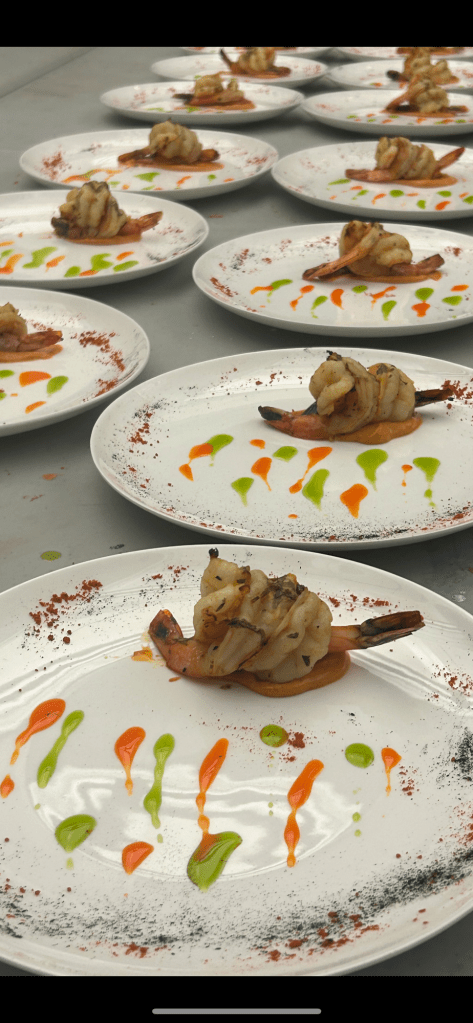
This dish captured the soulful flavors of Spain, marrying smoky, spicy, and herbaceous notes into a single, beautifully plated course. Plump, grilled shrimp rested atop a smooth smoked paprika aioli, its richness balanced by a drizzle of chorizo oil that added depth and a whisper of spice.
The plate itself became a canvas, featuring bright splashes of herbaceous green and fiery orange sauces, carefully arranged to create movement. A dusting of smoked paprika and black seasoning enhanced both the visual impact and the flavor profile, tying the elements together seamlessly. The shrimp, slightly charred and kissed with citrus, delivered a perfect balance of sweet, smoky, and tangy flavors, making this dish a true sensory experience.
Spring Vegetable Galette with Microgreens & Floral Accents
A delicate, golden galette served as the foundation for this vegetable-forward course, embracing the freshness of spring with layers of roasted vegetables and a creamy, melty cheese that added just the right amount of richness. The buttery, flaky pastry provided contrast to the soft, vibrant filling, creating a dish that was both comforting and elegant.
Plated with precision, the galette was topped with microgreens and edible flowers, enhancing its visual appeal and reinforcing the floral theme of the evening. Surrounding it were dots of green herb purée, golden saffron emulsion, and a citrus-infused sauce, each bringing a unique brightness to the dish. A thin radish slice with a touch of caviar-like garnish completed the plate, offering a crisp, slightly peppery bite.
An Artistic Approach to Plating
These two dishes embodied contrasting yet complementary plating styles—one bold and expressive, the other delicate and refined. The Spanish Shrimp featured dynamic splashes of color, while the Spring Vegetable Galette showcased a more structured, garden-like elegance.
Each course built upon the evening’s theme, demonstrating that floral-inspired cuisine is not just about incorporating flowers—it’s about capturing the vibrancy, delicacy, and natural beauty of the ingredients themselves.
As the dinner continued, these plates provided a moment of contrast and cohesion, reinforcing the evening’s exploration of flavor, texture, and artistry.
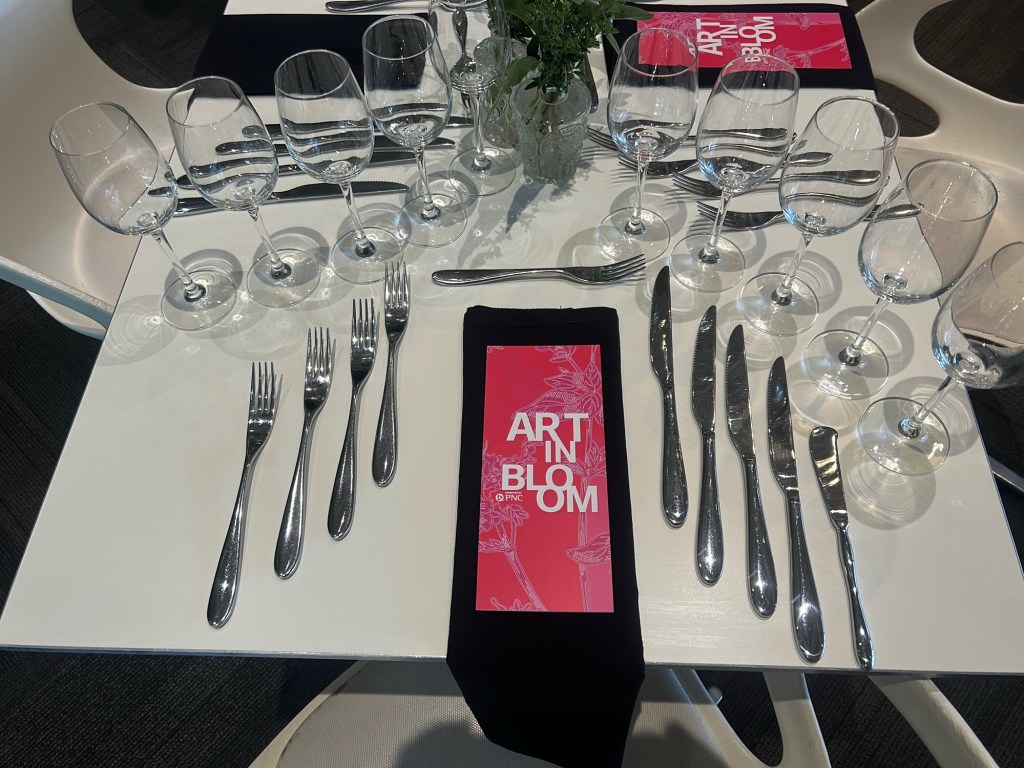
Spring is the season of renewal—of blossoms opening, fresh greens emerging, and flavors that awaken the senses. This dinner was designed to capture that feeling, weaving floral elements into every course in a way that was both intentional and artful. From the delicate interplay of textures to the thoughtful use of botanicals, this experience was more than just a meal—it was a celebration of nature’s vibrant transition into spring.
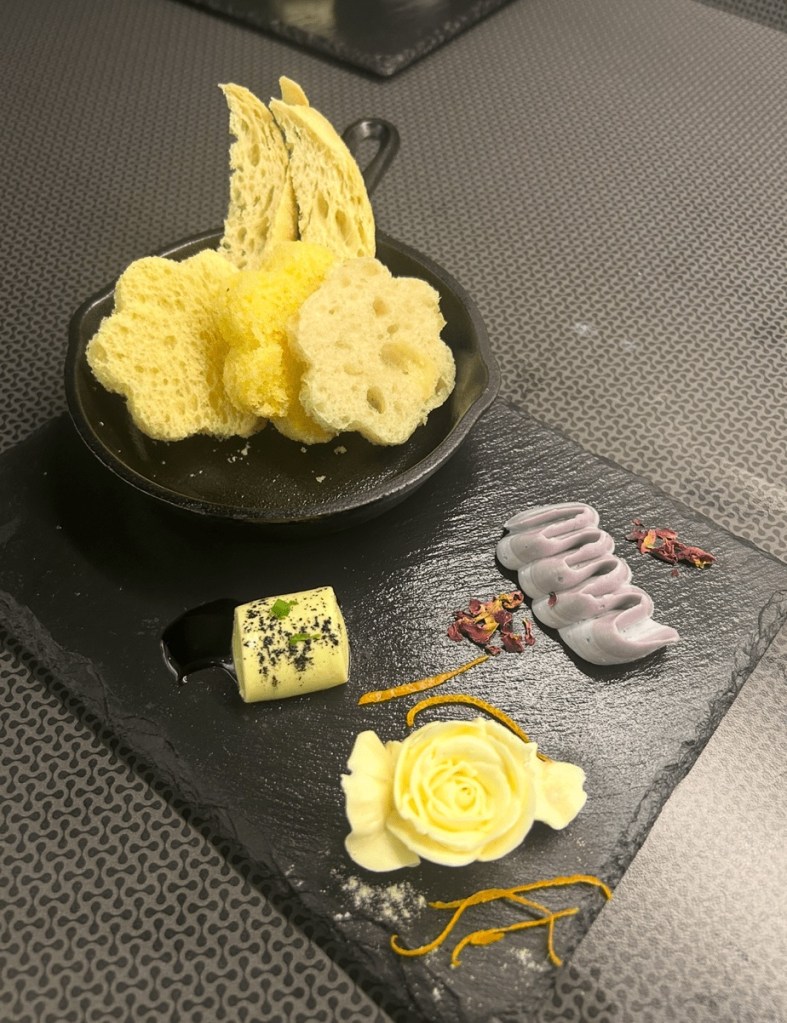
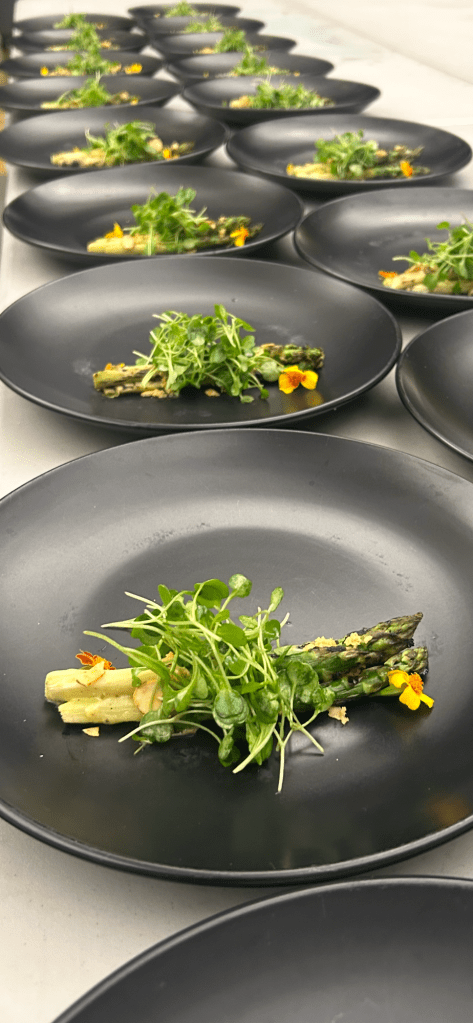
Two standout courses from the evening truly encapsulated this theme: “Petals and Loaves,” a trio of artisanal breads with floral-infused butters, and a Charred Asparagus Salad with almonds and marigold petals, balancing freshness and depth.
First Impressions: Petals and Loaves
Bread and butter is often seen as a simple, familiar start to a meal. But here, we took that foundation and elevated it into something delicate and poetic. “Petals and Loaves” featured a selection of artisanal breads from LeFarm, thoughtfully paired with three unique butters:
• Orange Blossom Honey Butter – A silky, slightly sweet butter infused with the bright floral notes of orange blossoms.
• Savory Chive Flower & Herb Butter – A blend of aromatic chive flowers, fresh herbs, and rich butter, offering a balance of herbaceous and umami flavors.
• Lavender & Lemon Butter – A striking pale purple butter with a light floral essence, finished with a hint of citrus to keep it fresh and balanced.
Presented on black slate, the dish had a natural, earthy aesthetic, with butter piped in elegant floral shapes, delicate dried petals scattered across the plate, and a fine dusting of black salt for contrast. The crisp textures of the bread and the softness of the butters played against each other, setting the tone for the evening—a meal where every element was as visually striking as it was flavorful.
A Study in Contrast: Charred Asparagus Salad with Almonds & Marigold Petals
The third course of the night was all about balance—between smoky depth and fresh vibrancy, crisp textures and delicate petals, richness and acidity.
At the heart of the dish was charred asparagus, its edges kissed by fire, enhancing its natural sweetness while adding a subtle bitterness that played beautifully against the bright, tangy elements in the dish.
The asparagus was layered over tender white asparagus spears, creating a contrast in both flavor and color. A scattering of crushed toasted almonds added a nutty crunch, while shaved Manchego cheese lent a creamy, salty note.
But what truly made the dish sing were the marigold petals and microgreens—bringing in a burst of color and a whisper of floral complexity that lifted the dish beyond just another salad. A final drizzle of a light lemon-mustard vinaigrette with honey tied it all together, letting each bite unfold with layers of brightness, umami, and freshness.
Presented on sleek black plates, the dish visually mirrored the bold-yet-delicate nature of spring itself, with wild, organic plating that felt almost as if it had been plucked straight from a garden.
A Dinner That Tells a Story
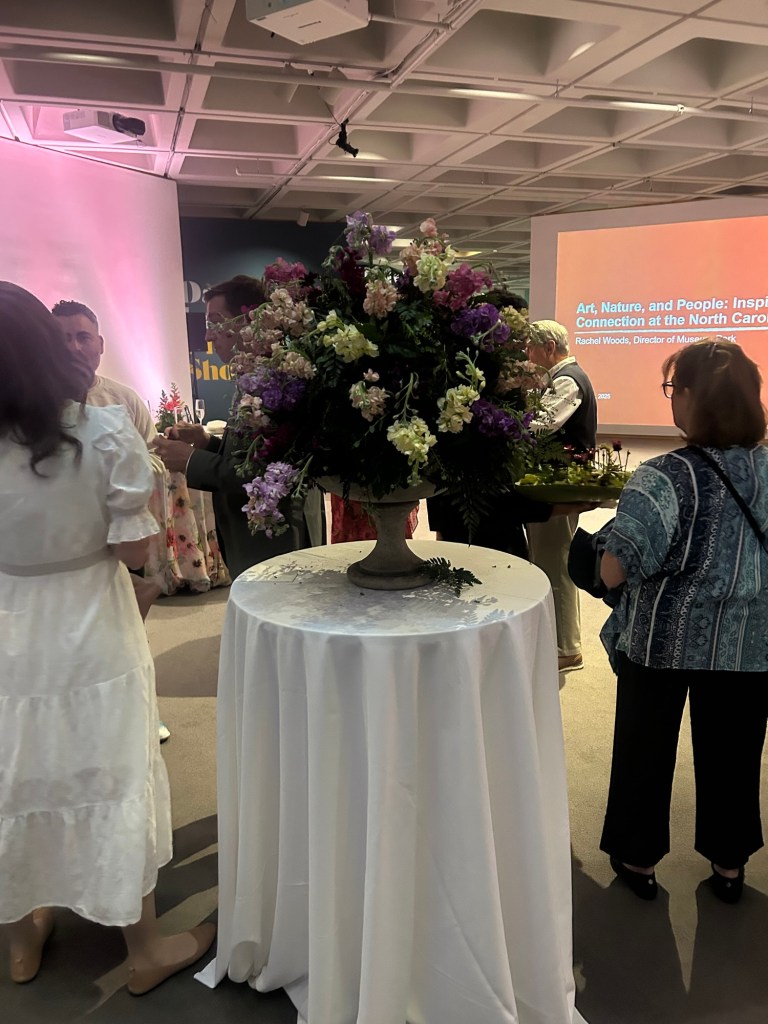
Guest had the opportunity too build an arrangement
Each course throughout the night continued this theme, weaving floral notes, seasonal ingredients, and unexpected pairings into an immersive dining experience.
From the artisanal breads kissed with floral-infused butters to the asparagus salad that balanced smoke, crunch, and botanical brightness, this dinner wasn’t just about celebrating seasonal ingredients—it was about highlighting the small, beautiful details that make spring so special.
Food, when approached with thoughtfulness, can be more than nourishment—it can be a reflection of nature, a sensory experience, and a moment of artistry. And this floral-inspired dinner was exactly that: a tribute to the season of growth, renewal, and the beauty of fleeting flavors.
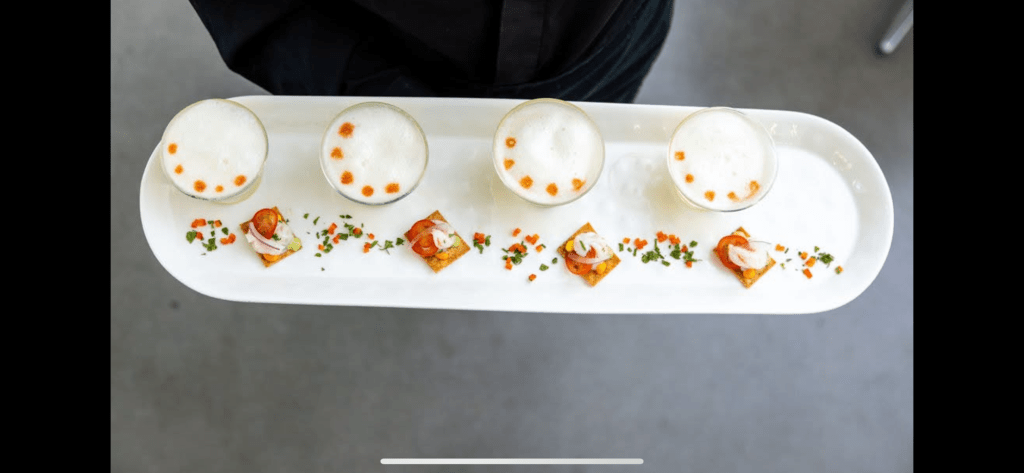
Peru’s most iconic cocktail, the Pisco Sour, is as bright and refined as it is bold. A mix of pisco, fresh lime juice, simple syrup, and egg white, topped with aromatic bitters, it finishes with a smooth foam and a crisp citrus snap. Its creamy texture and tart punch make it a versatile pairing partner—especially for dishes with heat and acidity.
Peruvian Shrimp Ceviche: Citrus, Spice & Sauce
This shrimp ceviche is layered with vibrant coastal flavors: tender shrimp marinated in lime juice and tossed with cherry tomatoes, thin-sliced red onion, and fresh cilantro. What sets it apart are two Peruvian sauces:
• Ají Amarillo: A golden, fruity chili sauce made from Peruvian yellow peppers, blended until silky with garlic, lime juice, and a touch of mayo. It adds a sweet heat that lingers on the palate.
• Ají Verde: A bright green sauce with cilantro, jalapeño, lime, and creamy elements like yogurt or mayo. It’s herbaceous, tangy, and cooling—the perfect contrast to the amarillos’ warmth.
Each bite of ceviche gets a touch of both sauces—fiery and cool, creamy and sharp—balanced by a sprinkle of finishing salt or a drizzle of chili oil for depth.
Why This Pairing Works
• Lime in both the ceviche and cocktail ties the flavors together with sharp citrus continuity.
• The creaminess of ají sauces mirrors the egg white foam of the cocktail, creating a lush, rounded mouthfeel.
• Ají Amarillo’s subtle fruitiness complements the floral, grape-forward notes of pisco.
• Ají Verde’s herbal pop harmonizes with the bitters and sharpness of the cocktail, creating lift and complexity.
Bringing This to Your Table
Mini Pisco Sours
• 2 oz pisco
• ¾ oz fresh lime juice
• ½ oz simple syrup
• 1 egg white
• Angostura bitters
Shake all ingredients (except bitters) without ice. Add ice, shake again until frothy and cold, then strain into small glasses. Garnish with a few drops of bitters.
Peruvian Shrimp Ceviche with Ají Amarillo & Ají Verde
• Poached shrimp, chopped
• Fresh lime juice
• Cherry tomatoes, halved
• Red onion, thinly sliced
• Cilantro
• Ají Amarillo Sauce
• Ají Verde Sauce
• Finishing salt or chili oil
Mix shrimp with lime, onion, tomato, and cilantro. Plate in tasting spoons or small glasses, topping each with a swirl of both sauces and a finishing touch of salt or oil.
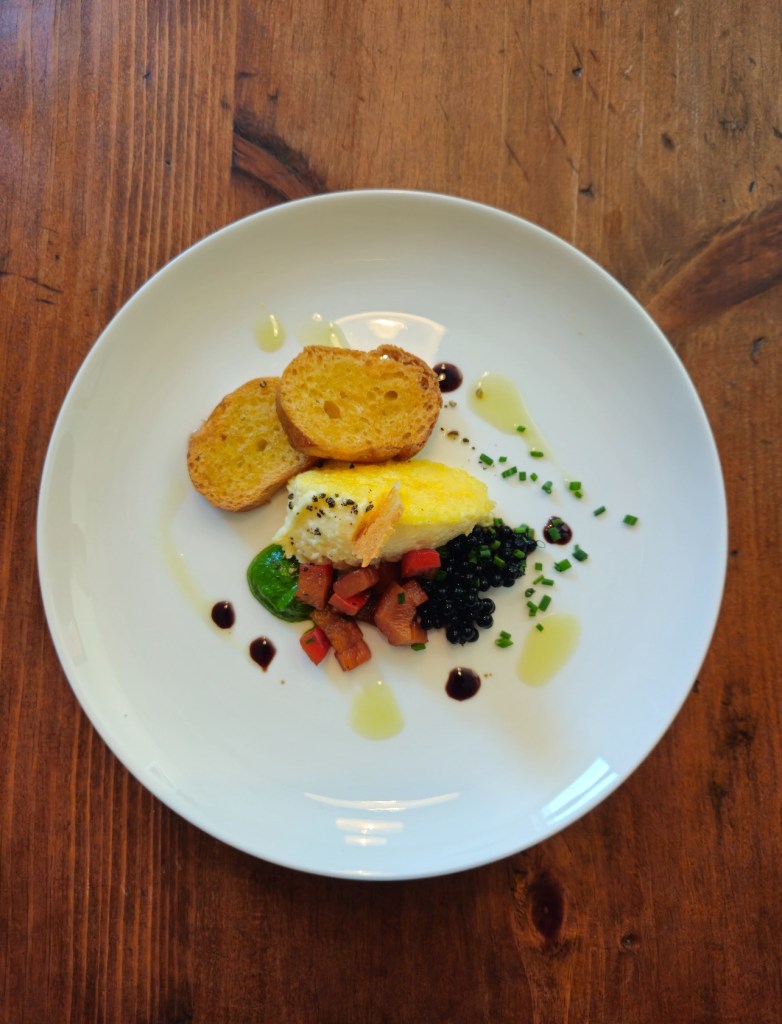
For a spring dinner at the North Carolina Museum of Art, I created this refined yet comforting dish: Parmesan Flan with Balsamic, Brioche Toast, and Roasted Peppers.
The flan, smooth and rich with aged Parmigiano-Reggiano, was the star—delicate yet packed with umami. Crisp brioche toasts provided crunch, while roasted peppers added a subtle smokiness. To balance the richness, a balsamic reduction and balsamic pearls brought bursts of acidity and sweetness, finishing with a drizzle of olive oil and chives for freshness.
Simple yet elegant, this dish was a moment of quiet indulgence—a celebration of texture, contrast, and spring’s subtle vibrance.
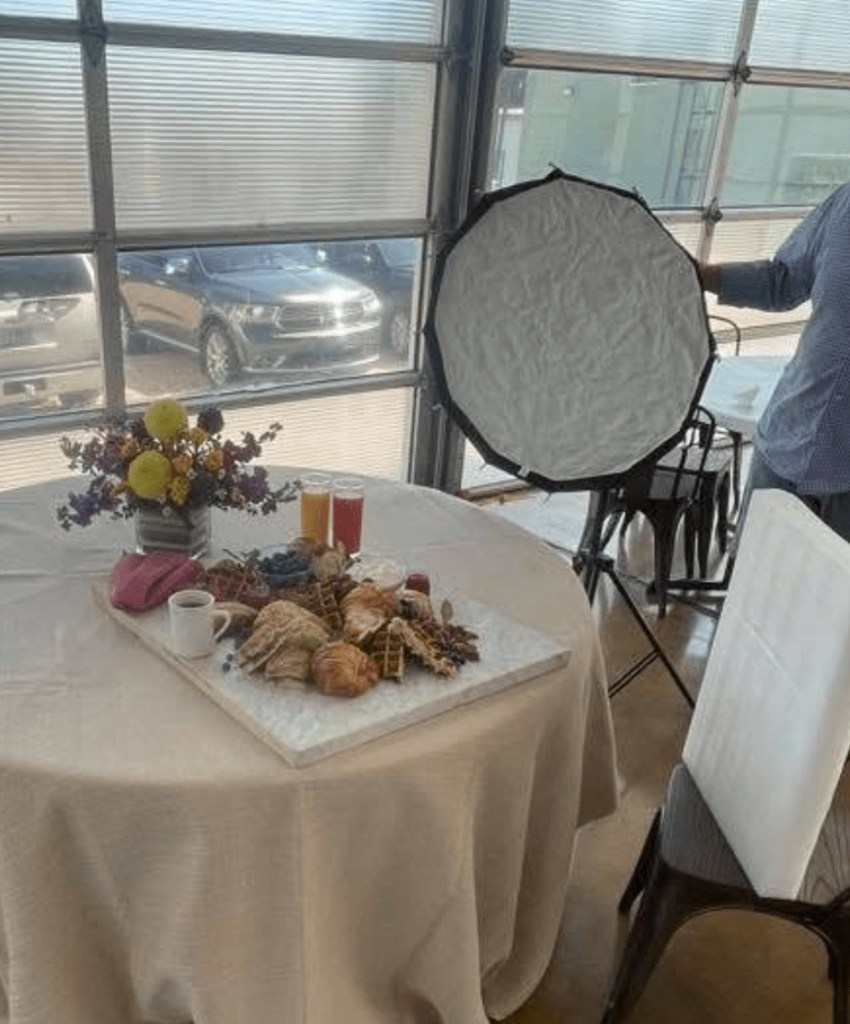
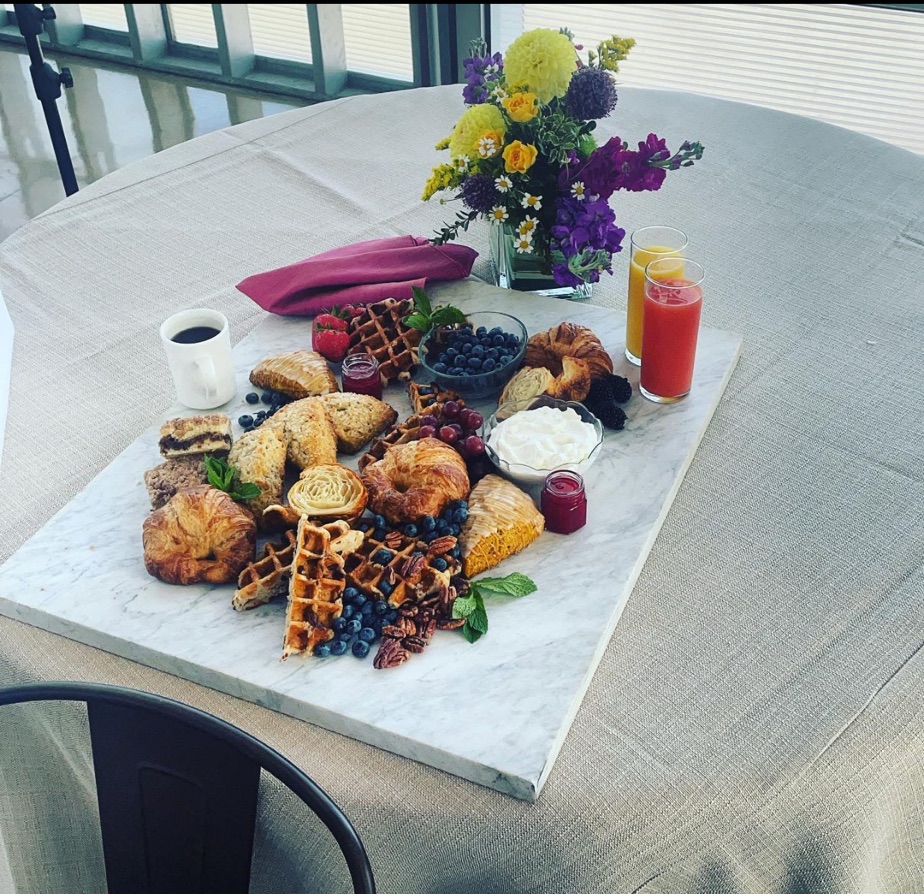
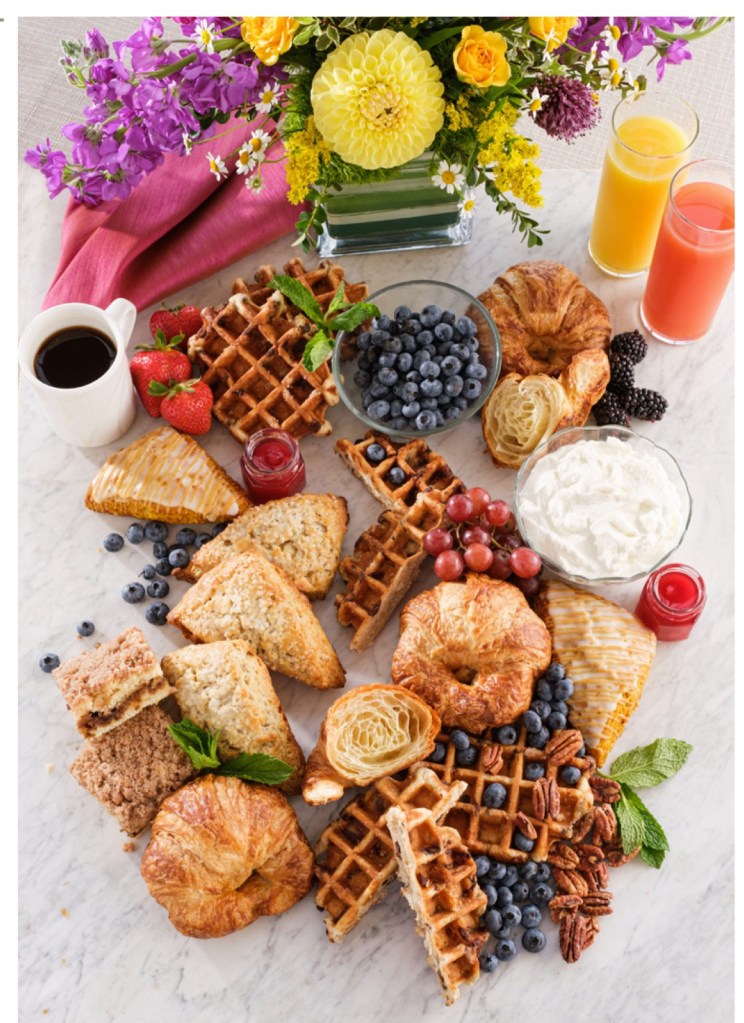
Breakfast is often thought of as a simple, functional meal—a quick bite before the day begins. But when done with care and creativity, it can be an experience, a visual and culinary celebration that sets the tone for the day. This breakfast spread, styled for a catering photo shoot, was designed to capture the warmth, indulgence, and beauty of a leisurely morning feast.
Bringing the Board to Life
Instead of traditional plated breakfast service, we chose a large marble board as our canvas, allowing the ingredients to naturally flow and interact. The mix of textures—from flaky croissants and buttery pastries to the deep golden waffles with crisp edges—creates an inviting, abundant feel. Each element was placed with intention, ensuring a sense of effortless luxury while still feeling organic and natural.
The Details That Matter
Food styling is about the little touches that make a dish feel alive. Here, pops of fresh fruit like blueberries, blackberries, and grapes add bursts of color and freshness, while sprigs of mint introduce a bright green contrast that enhances the overall composition. Small jars of fruit preserves and a bowl of whipped cream invite customization, encouraging guests to build their perfect bite.
The drama of the setting also plays a key role—natural light, the soft folds of the tablecloth, and the addition of a vibrant floral arrangement create an atmosphere that is both elegant and inviting. The contrast of deep berry tones in the napkin and flowers against the neutral marble and linen further enhances the richness of the scene.
More Than Just Breakfast—An Experience
This spread isn’t just about food; it’s about creating a moment. Whether for a catered event, a special gathering, or simply a slow morning, the way a meal is presented can transform the way it’s enjoyed. With thoughtful styling, even the most familiar breakfast items become something extraordinary.
This is what I love about food styling—it’s about more than just making food look good. It’s about telling a story, evoking a feeling, and turning a meal into an experience worth remembering.
More Than Just Breakfast—An Experience
This spread isn’t just about food; it’s about creating a moment. Whether for a catered event, a special gathering, or simply a slow morning, the way a meal is presented can transform the way it’s enjoyed. With thoughtful styling, even the most familiar breakfast items become something extraordinary.
This is what I love about food styling—it’s about more than just making food look good. It’s about telling a story, evoking a feeling, and turning a meal into an experience worth remembering.
Brunch goals! If you could add one more thing to this board, what would it be?
 The Elevated Chef